If you rush the work, you don’t just get fewer details. You get fewer decisions. You get a room that looks like it was assembled by reference. A home that feels like a catalog. A restaurant that reads like a set. Everything might be technically “good,” but somehow… feels empty.
Time is what prevents that.
Time is what gives an idea weight. It lets you pull influences from the right places: art, architecture, era, culture, nature, the rituals people actually live by. Then you edit until the story can stand up without props.
It’s how a space starts to feel collected, not decorated. Personal, not performative.
Time is also how you earn restraint, the most misunderstood luxury in design. Restraint doesn’t mean less effort. It means more authority. It means every choice has a job. Nothing is there because the wall felt empty in a rendering. It’s there because a great designer guided you toward the right decision.
And time is how details stop being “cute” and start being convincing.
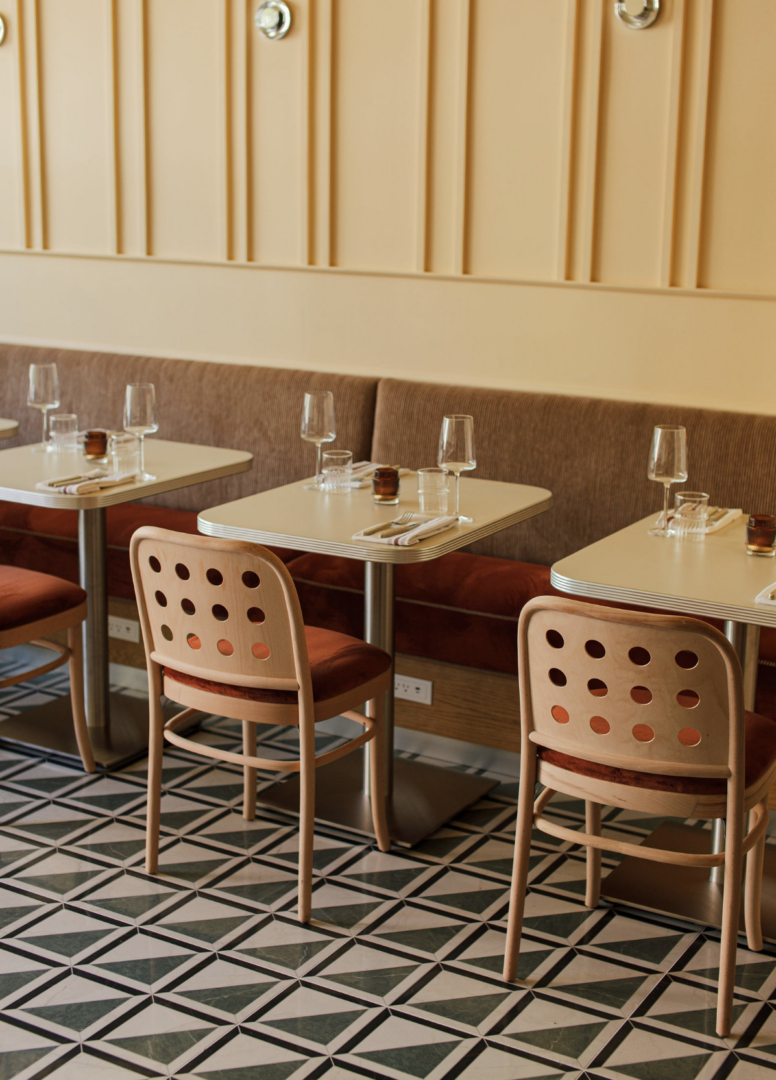
The convincing kind is almost unnoticeable. The door hardware that feels right in your hand. The chair that invites you to stay. The edge of a table that’s been considered, not just purchased. Materials that don’t just survive life, they get better with it. In a home, that might be the patina on a well-worn hallway runner or the way plaster catches afternoon light. In a restaurant, it’s the same story, just designed with more traffic and higher stakes in mind.
That’s what you’re paying for: not “decor,” but discernment. A hundred small decisions agreeing with each other and feeling just right.
When the work is rushed, you get a space full of good parts that never become a whole: choices that don’t talk to each other, details that don’t support the story, and “moments” that start doing too much because the concept isn’t carrying enough.
But with the right time and a discerning designer, you get something rarer: a place that feels inevitable.
Calm. Specific. The kind of space people remember without trying.
And without a great designer, you don’t get that alignment. You get a pile of good ideas. And a pile of good ideas is not a design. It’s a group project.
You’ve seen the results: the space that’s visually loud because it doesn’t know what to prioritize. The room that keeps adding “moments” because it never established a point of view. The house that looks great in photos but feels oddly impersonal in person. The restaurant that looks “new” for a minute, then starts chasing its next identity.
But when you let the work marinate, when you explore, then cut, then refine, something different happens. The space gets balanced in a new way. A way that invites you to settle in, soak up the details, and become part of a story bigger than yourself.
That’s staying power. And longevity is the real flex, whether you’re building a dining room or a destination.
If you’re the kind of client who wants that, who wants the details to mean something and the whole to feel true, we’d love to be your partner.
Bring the dream. We’ll bring the ambition and the discipline to make it real. Time and time again.